
A kitchen garden can begin with one small container and one simple routine. Many new gardeners overcomplicate the process before they even buy a plant. An indoor herb garden for beginners works best when it starts with familiar flavors and realistic expectations. You do not need a greenhouse, a large shelf, or expensive equipment to begin. A bright window, good drainage, and attention to soil moisture create a strong foundation. Start with herbs you will actually use. The more useful the plants feel, the easier it is to care for them consistently. Small daily attention builds stronger results than a complicated plan you never maintain.
Choose herbs that already belong in your kitchen routine. Basil works well for pasta, sandwiches, and summer salads. Parsley adds freshness to grains, soups, and roasted vegetables. Chives bring mild flavor to eggs and potatoes. Mint can brighten drinks, fruit, and desserts. Oregano works well in many savory meals. Choose two or three varieties rather than filling every available surface at once. A simple fresh cooking herbs plan lets you learn each plant’s needs before expanding. Familiar flavors make harvesting more rewarding.
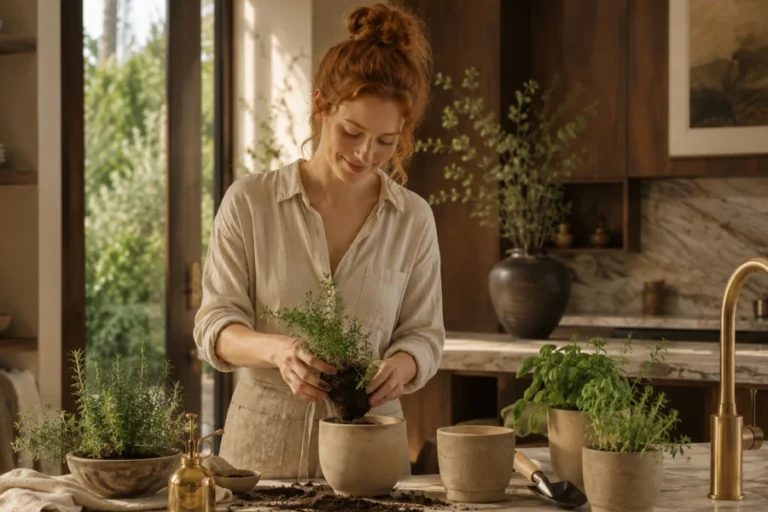
Good containers support healthy roots without creating more work. Choose pots with drainage holes and use saucers underneath. Avoid oversized containers that stay wet for too long. Use lightweight pots if you may need to move plants toward better light. Group herbs with similar needs together when possible. Keep a small pair of scissors nearby for quick harvesting. A flexible apartment herb setup should be easy to clean and easy to adjust. Practical containers make consistency easier.
Plants communicate through leaves, growth speed, color, and soil. Yellowing leaves may suggest too much water or not enough light. Crispy edges can indicate dry conditions or warm airflow. Slow growth may mean a plant needs stronger light or fresh nutrients. Check the soil before watering and watch how each plant responds. Keep a simple reminder on your phone during the first few weeks. A helpful beginner herb care routine can make these observations feel less overwhelming. Your own home will teach you what works.
Long routines rarely survive busy weeks. Spend a few minutes every two or three days checking soil and leaves. Water only the plants that need it. Remove faded leaves and wipe spilled soil from trays. Rotate containers when growth begins to lean toward one direction. Harvest small amounts regularly when herbs are ready. A short routine is easier to repeat without resistance. Repetition is what turns a new interest into a lasting habit.
Herbs become more meaningful when they are woven into ordinary meals. Snip basil while finishing dinner or add mint to an afternoon drink. Let the scent of the plants become part of the kitchen atmosphere. An indoor herb garden for beginners is not only about growing food. It is also about creating a small daily moment of care. Start where you are, grow slowly, and let the habit become useful before it becomes ambitious.



Leave a comment