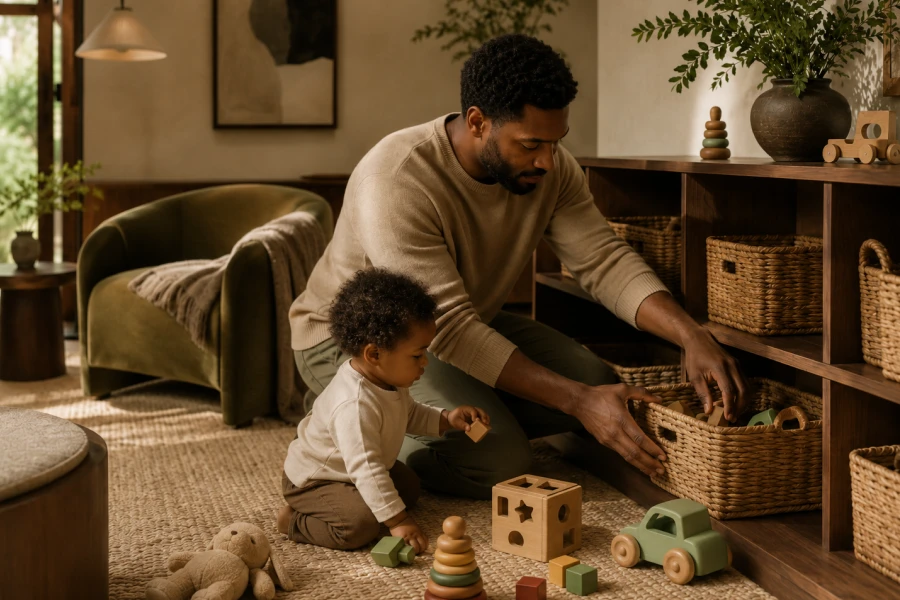
Children need room to imagine, experiment, build, and make a little mess. Parents need floors that do not become obstacle courses by the end of the day. Kids toy organization creates a middle ground where play remains open and cleanup feels possible. The goal is not to hide every toy behind a closed door. It is to make favorite items easy to find, safe to use, and simple to return. Begin by looking at what your child uses most often. Keep those items accessible and move less-used toys out of the immediate space. A smaller visible collection often creates calmer, more focused play.
Gather toys into broad groups before choosing bins or shelves. Separate building toys, books, art supplies, pretend-play pieces, puzzles, and active toys. Remove broken items, incomplete sets, and anything your child has clearly outgrown. This step creates an honest picture of what the room needs to hold. Keep categories broad enough for children to understand. A practical easy toy organization system should not require children to remember ten complicated rules. The simpler the system feels, the more likely it will stay useful.
Children are more likely to clean up when the storage fits their height and ability. Choose lightweight baskets that can be carried without tipping. Use open bins for larger toys and lidded containers for small pieces. Keep everyday favorites on low shelves where children can choose them independently. Store special sets higher until an adult can help bring them down. A child-friendly toy storage solutions setup gives every item an obvious home. Independence grows when children can access and return their own toys.
Too many toys in view can make play feel scattered and overwhelming. Toy rotation keeps the collection fresh without requiring more purchases. Store part of the collection out of sight for several weeks. Bring it back when current favorites begin to lose momentum. Rotate based on interests, seasons, holidays, and developmental stages. Keep only a few versatile toys available all the time. A flexible kids toy rotation routine also gives you regular opportunities to check for broken parts. Less visual clutter often leads to deeper play.
Cleanup becomes easier when it happens at the same points in the day. Try a short reset before dinner, bath time, or bedtime. Give one direction at a time, such as putting books away before building blocks. Use baskets that are visible and easy to reach. Keep the tone calm rather than treating every reset like a major task. Music or a brief timer can make the transition feel lighter. The goal is progress, not a perfectly styled room every night. Small repeated habits create stronger results than occasional large cleanups.
A useful playroom changes as children grow and interests shift. Review shelves every few months to see what still belongs within reach. Move baby toys out when they are no longer useful. Bring more advanced sets forward when children are ready for them. Keep a donation basket nearby for quick decisions. Kids toy organization succeeds when it stays flexible. A room that adapts to your family will keep feeling calm, safe, and useful through every stage.



Leave a comment