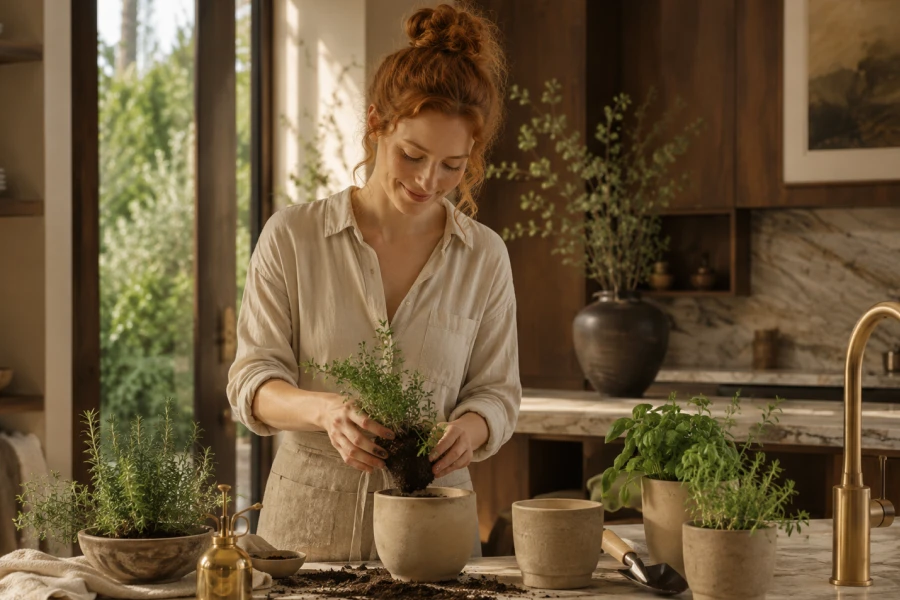
Fresh herbs can make a simple meal feel more colorful, fragrant, and personal. They also bring a little life to kitchens that need warmth beyond wood, stone, and appliances. Easy herbs to grow indoors offer a practical way to start gardening without needing a yard or elaborate setup. A bright window, a suitable pot, and a consistent habit can take you surprisingly far. Start with herbs you already enjoy using in everyday meals. That gives each plant a purpose from the beginning. Small successes build confidence faster than a large, complicated collection. Indoor gardening becomes easier when you begin with what feels useful.
Basil, parsley, mint, chives, and oregano are popular choices for beginner indoor gardens. Each offers useful flavor while helping you learn simple plant care. Start with healthy young plants if growing from seed feels intimidating. Use pots with drainage so roots do not sit in excess moisture. Choose quality potting mix rather than outdoor soil. Place saucers beneath containers to protect counters and shelves. A helpful indoor herb starter plan keeps your first setup manageable. One or two healthy plants are a better beginning than ten struggling pots.
Light determines how well most indoor herbs will grow. Watch your windows for several days before buying more plants. South-facing and bright west-facing windows often provide useful conditions for many culinary herbs. Keep pots close to the light without pressing leaves against cold glass. Avoid placing plants near hot vents that dry the soil too quickly. Rotate containers occasionally so growth stays even. A clear low-light herb options overview helps you choose plants that fit your actual space. Observing light is more useful than guessing.
Overwatering is one of the most common beginner mistakes. Check the top layer of soil before reaching for the watering can. Water only when it feels dry enough that your fingertip does not pick up moisture. Let excess water drain fully before returning the pot to its tray. Different herbs need different rhythms depending on light and container size. Mint often enjoys more moisture than herbs such as oregano or rosemary. A useful herb watering routine gives you a simple way to notice patterns. Consistent observation matters more than following a rigid calendar.
Harvesting helps herbs stay useful and can encourage fuller growth. Snip small amounts when you cook instead of waiting for one large cutting day. Use clean scissors or pinch soft stems gently. Avoid taking too much from young plants at once. Add basil to pasta, chives to eggs, mint to tea, and parsley to soups or salads. The more you use your herbs, the more connected the project feels to daily life. Fresh leaves make ordinary meals feel more considered. They also give you a reason to check each plant regularly.
A drooping leaf is not a failure. It is information about water, light, temperature, or timing. Start small and let each week teach you something about your kitchen. Keep the setup tidy so care feels pleasant rather than complicated. Easy herbs to grow indoors can become a small daily ritual that makes your home feel more alive. You do not need perfect results to enjoy the process. A few healthy pots can change how you cook and how your kitchen feels.




Leave a comment