
A kitchen feels more inviting when something fresh is growing nearby. Herbs add color, scent, and flavor without requiring a major renovation or dedicated garden room. Kitchen herb garden ideas can turn a sunny windowsill, counter corner, or shelf into a useful everyday feature. The best arrangement balances light, access, and visual simplicity. Begin by thinking about where you prepare meals and which herbs you reach for most. Place plants close enough to use but far enough from splashes, heat, and clutter. A small, thoughtful grouping often looks better than a crowded collection. Fresh herbs can become part of the room instead of feeling like an extra project.
Choose a spot that receives good light and stays easy to reach. A bright windowsill is often the simplest choice. If your kitchen is darker, place the main herb collection in a nearby sunny room. Keep a small tray of clipped herbs in the kitchen for quick use. Avoid placing pots directly beside heat sources or behind large appliances. Measure the surface before choosing containers and trays. A useful easy kitchen gardening setup should leave enough room for daily cooking. Practical placement makes care feel automatic.
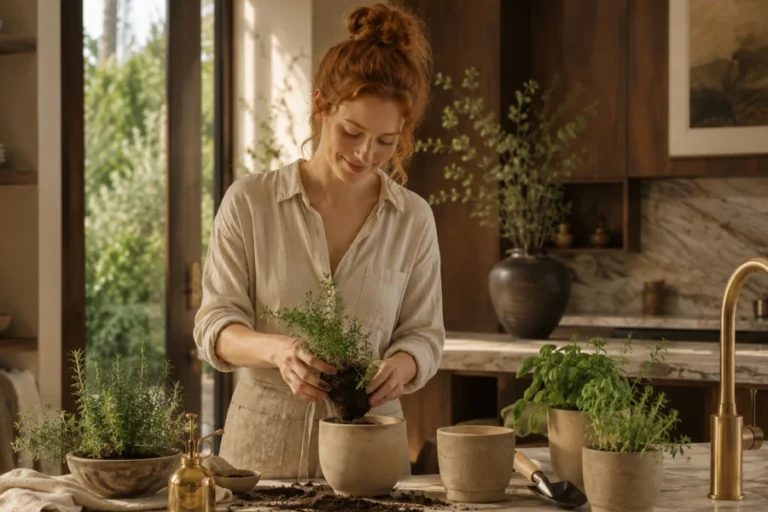
Containers can make the garden feel connected to the rest of the kitchen. Use terracotta for warmth, glazed ceramics for a polished look, or simple stoneware for quiet texture. Choose drainage first, then choose the finish you love. Group pots on one tray to protect counters and make the arrangement easier to move. Keep the number of styles limited for a calmer look. A flexible indoor plant confidence plan makes it easier to adjust as light changes. Containers should support the plant before they become a decorative statement.
Fresh herbs invite you to taste and adjust as you cook. Basil can finish pasta with brightness. Chives can make eggs, potatoes, and dips feel more complete. Mint can lift simple drinks and fruit dishes. Parsley can refresh soups, grains, and roasted vegetables. Keep the herbs you use most often closest to your preparation area. A practical culinary herb care routine turns harvesting into a natural part of preparing meals. The garden becomes useful because it participates in daily life.
Check soil while making coffee, preparing dinner, or wiping down counters. Water only when the plant needs it. Remove faded leaves and rotate pots toward the light. Keep scissors nearby so harvesting does not become a separate task. Wipe trays and windowsills during your normal kitchen reset. These small actions are easier to maintain than a long weekly project. A kitchen garden should add pleasure, not pressure. The most successful routines are the ones you can repeat.
A small herb garden adds more than ingredients to your meals. It gives the kitchen a softer, more lived-in feeling. The plants bring life to hard surfaces, cabinetry, and appliances. Kitchen herb garden ideas work best when they reflect what you cook and how you live. Start with a few pots, let the collection grow slowly, and keep the setup useful. A little fresh greenery can make an everyday kitchen feel distinctly yours.



Leave a comment