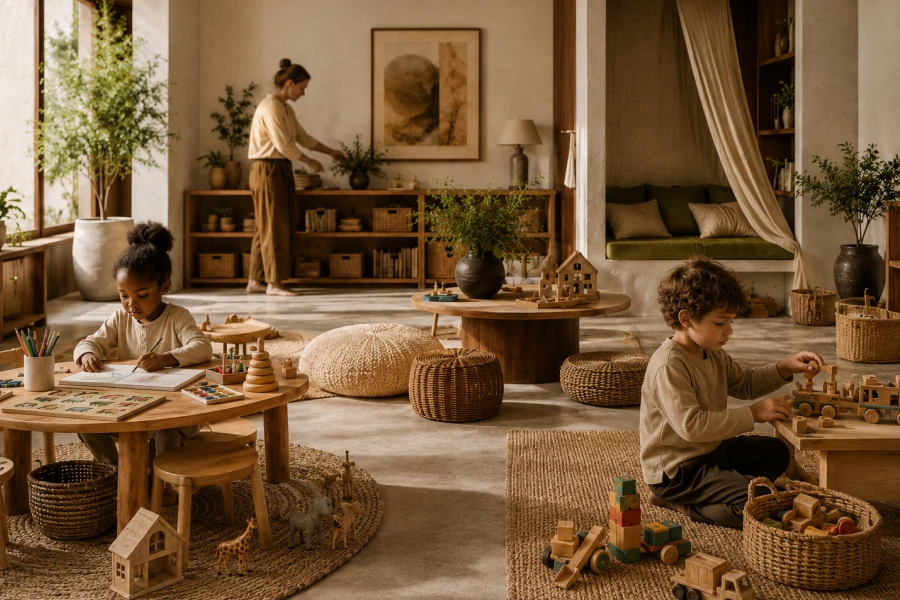
A playroom should support creativity before it supports perfection. Children need space to build, read, draw, move, and leave an idea unfinished for a little while. Playroom organization ideas help create a room that can hold those moments without turning into visual chaos. Start with the natural rhythm of the room. Think about how children enter, choose an activity, move to another area, and clean up. Those movements should guide where storage and furniture belong. Good organization feels nearly invisible when it works well. It simply makes play easier to begin and easier to finish.
Zones help children understand what each part of the room is meant to support. Create one area for building, another for books, and another for art or pretend play. Use rugs, low tables, or shelving as gentle boundaries between activities. Keep active toys near open floor space rather than beside quiet reading areas. A simple clutter-free play spaces layout keeps the room calm without making it rigid. A few clear zones are more effective than dozens of tiny categories. Purposeful placement encourages more focused play.
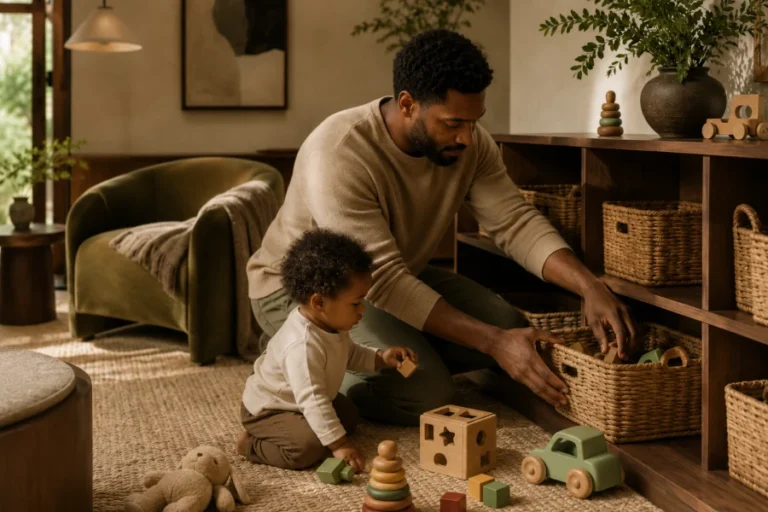
Children use systems that match their size and attention span. Place frequent favorites on low shelves or in open baskets. Keep special sets and messy supplies in areas that need adult help. Use containers that are simple to carry and easy to put back. Avoid deep bins that turn into a place where everything disappears. A practical playroom shelving ideas collection gives children more control over their own space. Accessible storage supports independence without giving up visual order.
Too many categories can turn cleanup into a frustrating puzzle. Group toys into broad families such as blocks, vehicles, dolls, books, art supplies, and costumes. Let each basket hold a clear type of item without becoming overly specific. This makes it easier to see what the family owns and what has been left out. Use containers sized for the category rather than forcing every toy into matching small bins. A simpler room asks children to make fewer decisions at the end of the day. That makes the system easier to maintain.
Children’s interests change fast, so the room should be able to change too. Use lightweight baskets, movable tables, and adjustable shelves whenever possible. Keep one open area available for a new project, a larger gift, or seasonal activities. Rotate materials based on what children are genuinely enjoying. A flexible daily cleanup habit plan helps the room stay useful even when the collection shifts. The goal is not a frozen design. It is a room that grows with your family.
When a playroom works well, it affects the entire house. Toys stop spilling into every nearby room because there is a clear place to return them. Parents spend less time searching for missing pieces. Children feel more confident managing their own belongings. Playroom organization ideas are really about making daily life lighter. A useful room does not need to look staged. It needs to recover easily after real play and still feel inviting the next morning.

Leave a comment